



Sourcing kitchenware wholesale from China has become the go-to strategy for importers, distributors, online sellers, and brand owners looking to balance cost, quality, and customization. China’s manufacturing ecosystem offers a broad range of products, from stainless steel cookware and silicone utensils to bamboo cutting boards and multifunctional storage solutions. For businesses aiming to compete in retail, e-commerce, or foodservice markets, understanding the wholesale landscape is crucial to making informed decisions and avoiding common pitfalls.
This guide provides a comprehensive overview of the kitchenware wholesale process, helping global buyers navigate product categories, pricing structures, OEM and ODM customization, quality control practices, and food safety standards. It is designed for a range of business models—from small online sellers testing products with flexible MOQs to large retail chains and brand owners seeking fully customized solutions. Each section highlights key considerations, potential risks, and practical tips to streamline sourcing from China efficiently and confidently.
1. What Products Are Included in Kitchenware Wholesale?
Kitchenware wholesale covers a wide range of functional products used in food preparation, cooking, storage, and serving. For B2B buyers, understanding these categories helps clarify sourcing scope, pricing structure, and supplier specialization. Most kitchenware suppliers in China focus on one or two core categories rather than everything, so category awareness is critical at the early sourcing stage.
Cooking Tools & Utensils
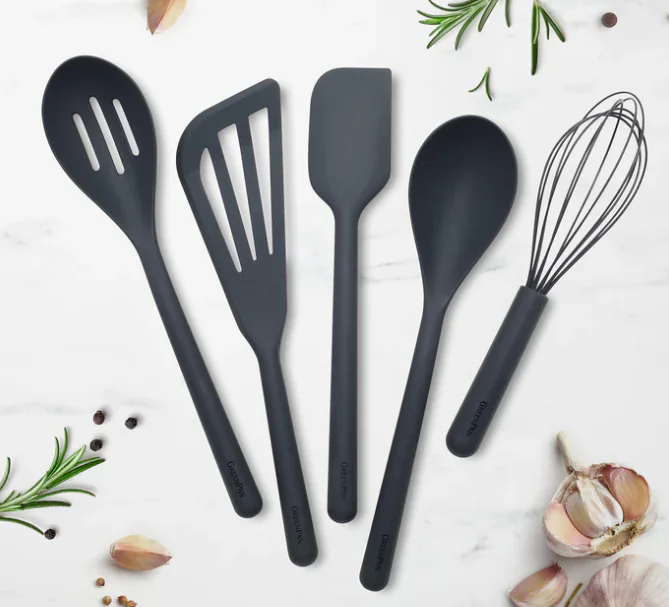
This category includes daily-use items such as spatulas, ladles, tongs, whisks, peelers, and turners. These products are typically made from silicone, stainless steel, nylon, or wood. In kitchenware wholesale, cooking utensils are popular due to low unit cost, stable demand, and strong suitability for private labeling and set sales. Quality differences mainly come from material grade, heat resistance, and molding finish.
Cookware & Bakeware
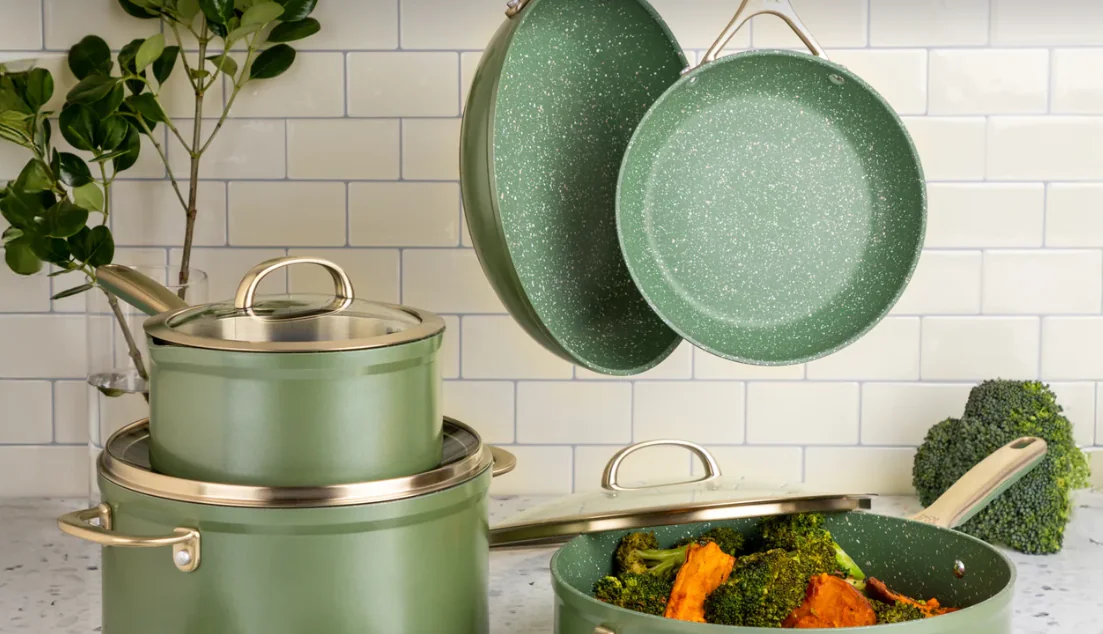
Cookware refers to pots, pans, frying pans, and saucepans, while bakeware includes baking trays, molds, and pans. These items usually involve higher production complexity and stricter quality control requirements. In wholesale kitchenware sourcing, cookware pricing is influenced by material thickness, coating type, and manufacturing process. Bakeware buyers often focus on food safety standards, surface coatings, and long-term durability.
Food Preparation Tools
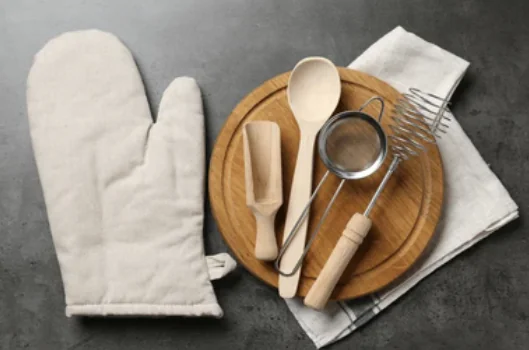
Food preparation tools include kitchen knives, cutting boards, slicers, graters, and mixing tools. These products directly affect food handling efficiency and safety. For kitchenware wholesale buyers, this category often requires closer attention to material selection, blade quality, and certification compliance. Cutting boards, for example, vary widely in material options such as bamboo, wood, plastic, and composite materials, each with different cost and market positioning.
Kitchen Storage & Organization
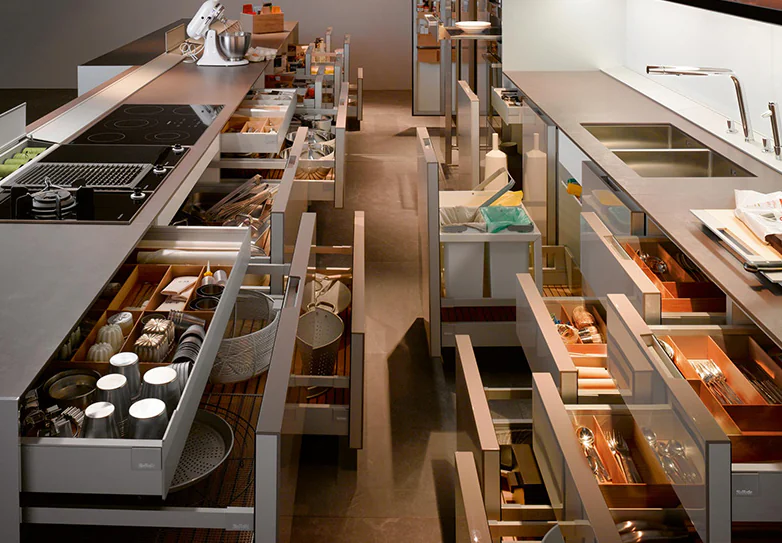
This category covers food containers, spice jars, storage boxes, racks, and organizers. Storage products are frequently purchased as bundled sets and are sensitive to packaging design and logistics efficiency. In kitchenware wholesale, storage items are valued for their high repeat order potential and suitability for retail and e-commerce channels. Material choices and sealing performance are key quality considerations.
Drinkware & Food Containers
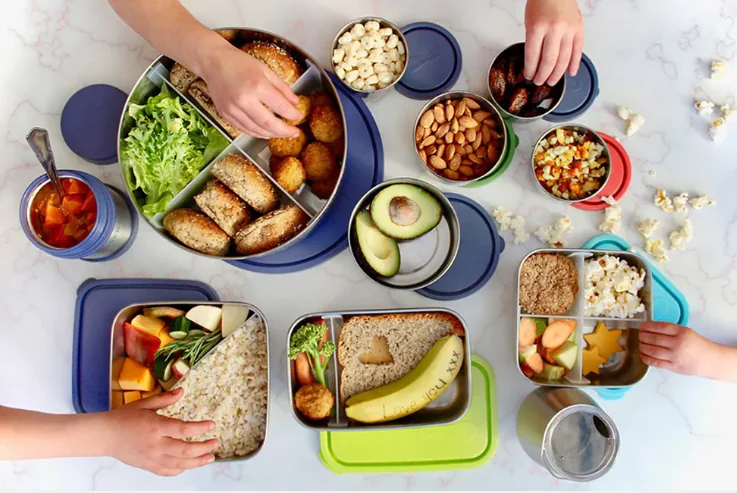
Drinkware includes tumblers, bottles, mugs, and cups, while food containers include lunch boxes and meal prep containers. These products often overlap with kitchenware wholesale sourcing due to shared materials and food-contact requirements. Buyers usually focus on capacity options, leak-proof performance, insulation features, and compliance with food safety regulations. Custom branding and packaging play a major role in this category.
2. Who Should Buy Kitchenware Wholesale from China?
| Buyer Type | Primary Focus | Key Concerns in Kitchenware Wholesale |
| Importers & Distributors | Cost stability & supply reliability | Consistent product quality, repeat order stability, certification compliance, long-term pricing |
| Amazon / Shopify Sellers | Speed & margin control | Flexible MOQ, competitive unit cost, packaging optimization, platform compliance |
| Retail Chains & Supermarkets | Standardization & risk control | Product consistency, food safety certification, factory audits, reliable delivery schedules |
| Brand Owners (OEM / ODM) | Customization & scalability | OEM/ODM capability, IP protection, material options, certification and testing support |
China remains one of the most competitive sourcing destinations for kitchenware wholesale due to its mature supply chain, flexible production capacity, and cost efficiency. However, different buyer types approach kitchenware sourcing with very different priorities. Understanding whether China is the right sourcing option depends on your business model, volume requirements, and long-term goals.
Importers & Distributors
Importers and distributors typically focus on stable pricing, consistent quality, and reliable long-term supply. When sourcing kitchenware wholesale from China, their main concern is not finding the lowest unit price, but ensuring that product specifications remain consistent across repeated orders. Certification compliance, packaging standardization, and predictable lead times are critical, as these directly affect downstream wholesale partners and retail clients. For this group, working with verified suppliers and having clear quality standards in place is essential to avoid supply disruptions.
Amazon & Shopify Sellers
For Amazon and Shopify sellers, kitchenware wholesale sourcing from China is largely driven by cost control, fast product iteration, and packaging optimization. These sellers often operate with smaller initial order quantities and test products frequently. Their key concerns include MOQ flexibility, branding options, and compliance with platform-specific requirements such as food-contact safety and labeling. Logistics efficiency also plays a major role, as shipping costs and delivery timelines directly impact listing performance and cash flow.
Retail Chains & Supermarkets
Retail chains and supermarkets approach kitchenware wholesale from China with a strong emphasis on product consistency, certification, and supply stability. Unlike online sellers, they require uniform product quality across large volumes and multiple delivery cycles. Compliance with regional safety standards, barcode and packaging accuracy, and factory audit capability are often mandatory. Price competitiveness matters, but only when it is supported by reliable production capacity and long-term supplier accountability.
Brand Owners (OEM / ODM)
Brand owners sourcing kitchenware wholesale from China are primarily concerned with customization capability, intellectual property protection, and scalability. OEM and ODM buyers need suppliers that can support custom materials, molds, colors, and packaging while maintaining strict quality control. Certifications, product testing, and clear documentation are critical for brand reputation and market entry. For these buyers, China’s advantage lies not only in manufacturing cost, but in the ability to turn product concepts into scalable, market-ready solutions.
3. How the Kitchenware Supply Chain Works in China
China’s kitchenware supply chain is built on a highly specialized manufacturing ecosystem rather than a single, centralized production model. Each stage—from raw material sourcing to final shipment—is handled by suppliers with specific expertise. For kitchenware wholesale buyers, understanding how this system works helps explain pricing differences, quality variations, and delivery timelines.
Raw Material Sourcing
Most kitchenware products start with raw materials sourced from established industrial clusters. Stainless steel is widely used for cookware, utensils, and drinkware due to its durability and food safety properties. Silicone is commonly applied in heat-resistant cooking tools and bakeware, while bamboo and wood are popular for cutting boards and eco-focused products. Plastic materials are still widely used for storage containers and accessories, where material grade and food-contact compliance play a critical role. Material selection directly affects cost, certification requirements, and product lifespan.
Factory Distribution in Key Regions
Kitchenware production in China is concentrated in several manufacturing regions, each with different strengths. Guangdong is known for its mature export-oriented factories and strong OEM/ODM capabilities, particularly for silicone and plastic products. Zhejiang specializes in a wide range of small kitchen tools and household items, supported by dense supplier networks and flexible production capacity. Shandong is more focused on metal processing, making it an important base for stainless steel cookware and utensils. For kitchenware wholesale buyers, factory location often influences MOQ, lead time, and pricing structure.
Factory vs. Trading Company: The Real Difference
In kitchenware wholesale sourcing, factories and trading companies play different roles rather than representing a simple “good or bad” choice. Factories control production and offer better pricing for stable, high-volume orders, but they may have limited communication or customization support. Trading companies, on the other hand, manage multiple factories and handle coordination, quality control, and documentation, which can be valuable for buyers sourcing multiple product categories. The key risk lies in not knowing which model you are dealing with, as this affects pricing transparency and responsibility when issues arise.
Why “Low Prices” Often Come from Incomplete Quotes
One of the most common misunderstandings in kitchenware wholesale from China is assuming that the lowest quoted unit price reflects the final cost. In reality, many low prices exclude critical components such as packaging, certification testing, quality inspection, or even basic material upgrades. Some suppliers also quote based on sample-level specifications that are not applied to mass production. Without a complete cost breakdown, buyers often encounter unexpected expenses later in the process, eroding profit margins and delaying shipments.
Typical Kitchenware Supply Chain Flow
Most kitchenware wholesale orders follow a standardized workflow that allows buyers to monitor progress and manage risk at each stage:
Design → Sampling → Production → Quality Control → Packing → Shipping
Each step represents a checkpoint where specifications, quality standards, and timelines should be confirmed. Skipping or rushing any stage increases the risk of quality issues, cost overruns, or delivery delays.
4. MOQ, Pricing & Cost Structure of Kitchenware Wholesale
When sourcing kitchenware wholesale from China, MOQ and pricing are closely tied to material selection, production process, and order complexity. Many buyers focus on unit price alone, but experienced importers understand that total landed cost is what ultimately determines profitability.
Typical MOQ by Material Type (Overview)
| Material Type | Common MOQ Range | Pricing Characteristics |
| Stainless Steel | 500–2,000 pcs | Stable cost, material thickness affects price significantly |
| Silicone | 1,000–3,000 pcs | Mold cost required, flexible for colors and shapes |
| Bamboo / Wood | 500–1,500 pcs | Hand-finish impacts consistency and lead time |
| Plastic (PP, Tritan) | 1,000–5,000 pcs | Low unit price, tooling and certification add cost |
👉 MOQ can be lower for stock items and higher for custom designs or private label orders.
4.1 How Kitchenware Wholesale Pricing Is Structured
Kitchenware wholesale pricing is not a single number but a combination of several cost components. Understanding each element helps buyers evaluate quotes more accurately and avoid hidden costs later.
Material Cost
Raw materials often account for the largest portion of the product cost. Factors such as stainless steel grade, silicone quality, or plastic resin type can cause noticeable price differences between suppliers. Lower quotes sometimes reflect downgraded materials rather than production efficiency.
Mold Cost
For customized kitchenware products, mold costs are usually charged separately. Silicone and plastic products almost always require molds, while metal items may involve tooling or stamping molds. Some suppliers amortize mold costs into unit pricing, which can make comparisons misleading if not clearly explained.
Packaging Cost
Packaging is frequently underestimated in kitchenware wholesale. Color boxes, set packaging, inserts, and protective materials all add to the final cost. Packaging choices also affect carton size and shipping efficiency, indirectly increasing logistics expenses.
Certification & Testing Cost
Food-contact kitchenware often requires certifications such as FDA, LFGB, or regional compliance testing. These costs are sometimes excluded from initial quotes and only raised when buyers prepare for shipment. Certification fees may apply per material, per model, or per production batch.
Logistics & Shipping Cost
Kitchenware products are often bulky or heavy, making logistics a major cost factor. Sea freight, port charges, destination handling, and local delivery should all be considered when calculating total landed cost. Packaging optimization and shipment consolidation can significantly reduce this expense.
4.2 Why Low Unit Price Does Not Mean Low Total Cost
A low unit price can be attractive, but it rarely tells the full story. In kitchenware wholesale sourcing, missing costs such as packaging upgrades, additional testing, quality inspections, or inefficient shipping can quickly erase initial savings. In some cases, buyers end up paying more than expected due to rework, delays, or rejected shipments. Comparing quotes based on the complete cost structure rather than unit price alone is the key to sustainable sourcing.
5. Customization Options for Kitchenware Products (OEM / ODM)
| Item | Stock Products | OEM (Private Label) | ODM (Full Custom) |
| Product Design | Existing factory design | Existing product with custom branding | Fully customized design |
| Logo Customization | Not available or limited | Laser / print / emboss | Integrated into mold |
| Color & Material Options | Fixed options | Limited customization | Full customization |
| Packaging Options | Standard packaging | Custom color box or set packaging | Fully customized retail packaging |
| Typical MOQ | Low | Medium | High |
| Lead Time | Short | Medium | Long |
| Upfront Cost | Minimal | Moderate | High (design & mold) |
| Best For | New buyers, test orders | Brand owners, online sellers | Established brands, retail chains |
Customization is one of the strongest advantages of sourcing kitchenware wholesale from China. From simple logo placement to fully customized product designs, OEM and ODM options allow buyers to differentiate their products and build long-term brand value. However, customization also affects MOQ, lead time, and overall cost structure, which makes it essential to understand each option before moving forward.
Logo Customization Methods
Logo application is often the first step toward private label kitchenware. Common methods include laser engraving, printing, and embossing. Laser engraving is widely used on stainless steel products due to its durability and clean appearance, while printing is more common for silicone and plastic items where color visibility matters. Embossed or debossed logos are typically integrated into molds, offering a seamless and long-lasting result. Each method differs in cost, minimum order requirements, and visual impact, and the choice should align with product material and brand positioning.
Color and Material Customization
Color and material customization allow buyers to adapt kitchenware products to specific markets and consumer preferences. Silicone and plastic products offer high flexibility in color matching, making them ideal for seasonal collections or brand-specific palettes. Material customization, such as adjusting stainless steel thickness or selecting eco-friendly bamboo and food-grade plastics, directly influences product quality and price. In kitchenware wholesale sourcing, these decisions should balance visual appeal, durability, and compliance with food safety standards.
Packaging Solutions for Kitchenware Wholesale
Packaging plays a critical role in both branding and logistics. Kitchenware products can be packed in standard color boxes, customized retail packaging, or bundled as complete kitchenware sets. Eco-friendly packaging options, such as recyclable cartons or reduced-plastic designs, are increasingly popular among brand owners and retailers. Packaging choices not only affect shelf presentation but also influence shipping cost and damage risk during transit. Buyers planning private label projects should consider packaging as part of the product design stage rather than an afterthought.
👉 Related services: OEM/ODM Services, Packaging Solutions
How Private Label Affects MOQ and Lead Time
Private label kitchenware projects typically require higher MOQs and longer lead times compared to stock products. Custom logos, colors, and packaging often involve mold adjustments, material preparation, and additional quality checks. As a result, production schedules may extend by several weeks, especially during peak seasons. Buyers entering kitchenware wholesale private label for the first time should plan timelines carefully and confirm all specifications before mass production to avoid delays and unexpected costs.
FAQ — Kitchenware Wholesale from China
1. What is the typical MOQ for kitchenware wholesale?
MOQ varies by product material and customization. Stainless steel items often start at 500–2,000 pcs, silicone 1,000–3,000 pcs, bamboo/wood 500–1,500 pcs, and plastic 1,000–5,000 pcs. Customized products or private label orders usually require higher MOQs due to mold and production setup costs.
2. Can I get my own logo on kitchenware products?
Yes. Buyers can choose from laser engraving, printing, or embossing depending on the material. OEM (private label) allows logo placement on existing products, while ODM enables fully customized designs integrated into molds. Packaging can also be tailored to your brand.
3. How do I ensure product quality and safety?
Work with suppliers who provide clear quality control checkpoints: pre-production, during production, and pre-shipment inspections. Functional testing for heat resistance, durability, and food-contact safety (FDA, LFGB, EU, BPA Free) is essential to prevent defects and regulatory issues.
4. What is the difference between a factory and a trading company?
Factories produce directly and often offer better pricing for large orders, but may have limited customization or communication support. Trading companies coordinate multiple factories, handle QC, documentation, and logistics, which can simplify sourcing but slightly increase unit cost.
5. Why do some suppliers offer very low prices?
Low unit prices often exclude important costs such as packaging, certifications, testing, or production adjustments. They may also be based on sample-level specifications rather than mass production. Always evaluate the complete cost structure instead of comparing unit prices alone.
6. How long does it take to receive a wholesale kitchenware order from China?
Lead time depends on product type, customization, and order volume. Stock products may ship in 2–4 weeks, OEM orders 4–8 weeks, and fully customized ODM orders can take 8–12 weeks or longer. Planning production and confirming specifications early helps avoid delays.
Conclusion
Sourcing kitchenware wholesale from China offers significant advantages for importers, online sellers, retail chains, and brand owners. From competitive pricing and diverse product options to customization capabilities and flexible packaging solutions, the Chinese supply chain provides the tools to build a successful kitchenware business. However, navigating this market requires careful planning, attention to quality control, and a clear understanding of costs, MOQs, and compliance requirements.
Whether your goal is to launch a new product line, expand an existing brand, or streamline procurement for retail or e-commerce, understanding the nuances of kitchenware wholesale is key to long-term success.
For businesses ready to take the next step, partnering with a professional sourcing agent or supplier network can simplify the process, maximize efficiency, and unlock access to premium kitchenware products tailored to your market needs.

I am responsible for the daily operation and content management of our website. My work focuses on optimizing user experience, improving website performance, and ensuring that customers can easily find the products and services they need. I collaborate with our sourcing and customer service teams to keep the site updated with reliable information, clear product details, and helpful resources. I aim to make our platform not only a business tool but also a valuable guide for international buyers.