


1. What Defines Educational and STEM Toys?
Educational vs STEM: the real difference
| Focus | Educational Toys | STEM Toys |
| Core purpose | Support early learning and development | Teach science, logic, and problem-solving |
| Learning style | Broad and age-based | Structured and outcome-driven |
| Typical users | Preschool & early learners | School-age children and above |
Educational toys focus on how children learn. STEM toys focus on what children learn and how they apply it.
Learning function vs pure entertainment
Not every fun toy is an educational toy. Educational and STEM toys must deliver clear learning value, not just play value. If the learning purpose cannot be explained in a simple sentence, the product is usually entertainment-first rather than education-first.
Why “STEM” labeling alone is not enough
Many products use “STEM” as a marketing label without a real learning structure behind it. For buyers, the key question is not how the toy is labeled, but:
- Does it encourage logical thinking or problem-solving?
- Is the learning process intentional, not accidental?
- Can the educational value be clearly communicated to parents or schools?
If the answer is unclear, the product is likely STEM in name only.
2. Why Sourcing Educational & STEM Toys Involves Higher Risk
2.1 Child safety is a brand responsibility
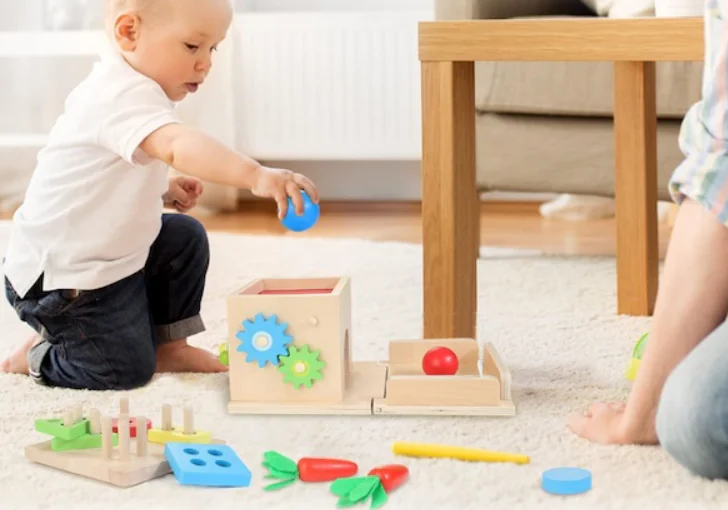
Educational and STEM toys are designed for children to use repeatedly, often in learning environments. This makes safety issues more visible and less forgiving. Material choice, small parts, and structural durability are not just quality concerns. They directly affect how a brand is perceived by parents, schools, and distributors. In this category, safety problems are rarely seen as isolated defects. They are seen as failures of responsibility.
2.2 Learning accuracy & age grading really matter
Unlike ordinary toys, educational and STEM toys are expected to deliver learning outcomes. If the difficulty level does not match the age group, the product quickly loses credibility. If instructions are unclear or learning goals are vague, the toy fails its purpose. Parents and educators judge these products not by appearance, but by results. A toy that does not teach as promised is considered a poor product, even if it is safe.
2.3 Regulatory scrutiny is higher in major markets
Educational and STEM toys attract more attention from regulators. Markets such as the U.S. and EU apply strict rules on testing, labeling, and documentation. Products that pass sampling may still face issues if production consistency is weak. Compliance in this category is not a one-time task. It is an ongoing requirement throughout the sourcing and production process.
Taken together, these risks place educational and STEM toys in a different class. They are brand-level products, not impulse-driven items. Every sourcing decision affects trust, credibility, and long-term market access. Treating them like ordinary toys is one of the most common — and costly — mistakes buyers make.
3. Key Safety & Compliance Factors Buyers Must Consider
3.1 Safety requirements vary by market
Educational and STEM toys are not regulated under a single global standard. Each major market applies its own safety and compliance rules. A product acceptable in one region may still face restrictions or relabeling requirements in another. For buyers, this means compliance decisions must be made before sourcing, not after production.
Understanding the target market is the starting point of any educational toy project.
3.2 Testing frameworks are different, but the logic is the same
| Market | Core testing framework | What it focuses on | Buyer takeaway |
| European Union | EN71 | Material safety, mechanical structure, labeling, age grading | Compliance must match the target EU market, not just the sample |
| United States | ASTM F963 + CPSIA | Chemical safety, physical hazards, documentation, traceability | Testing and documentation must stay consistent across production |
Below the standards, the logic is the same across markets.
Educational and STEM toys are evaluated on whether they are safe to use, structurally reliable, clearly labeled, and appropriate for the intended age group. Passing tests is not only about paperwork. It depends on consistent materials, stable production, and controlled processes — all closely linked to quality control and inspection.
3.3 Compliance is an ongoing process
Educational and STEM toys require continuous alignment between design, production, and documentation. From sampling to mass production, every stage affects compliance outcomes. A structured inspection and quality control process helps reduce surprises and protects long-term market access.
This is where quality control and compliance management become part of the sourcing strategy, not just a checklist.
4. Typical Educational & STEM Toy Categories in Global Trade
In global trade, educational and STEM toys are usually grouped by learning focus rather than by appearance. The categories below represent the most common segments buyers encounter when sourcing for international markets.
- STEM building kits
Designed to develop problem-solving and basic engineering thinking through structured assembly and hands-on interaction.
- Science experiment sets
Focus on simple scientific concepts and experiments, with higher requirements for safety instructions and age grading.
- Early learning educational toys
Aimed at preschool users, emphasizing sensory development, basic cognition, and material safety.
- Educational wooden toys
Popular for early education markets, where natural materials and surface treatment standards are critical.
- Coding and logic toys
Introduce sequencing, logic, or basic programming concepts, often requiring clear instructions and stable functionality. These categories differ in learning complexity, material use, and compliance focus, which directly affects supplier selection and quality control planning.
5. How to Identify the Right Supplier for Educational & STEM Toys
Finding the right supplier for educational and STEM toys is not about choosing the lowest price. It is about identifying partners who understand learning-focused products and can consistently meet safety and compliance requirements.
Check whether the supplier understands documentation
Educational toy sourcing involves specifications, safety standards, test reports, and labeling rules. A capable supplier can clearly explain these documents and follow them without repeated clarification. If requirements need to be simplified or corrected multiple times, it often signals limited experience with educational or STEM products.
Evaluate how the supplier cooperates during testing
Testing is not an isolated final step. Reliable suppliers understand why testing is required and actively support sampling, adjustments, and pre-shipment checks. Suppliers who delay test preparation or resist feedback usually create compliance risks later in the process.
Confirm batch stability, not just sample quality
A compliant sample does not guarantee compliant mass production. The right supplier can demonstrate material consistency, controlled production processes, and stable quality across batches. This reduces the risk of failing random inspections or follow-up tests in target markets.
Look beyond price when comparing suppliers
Lower prices often reflect gaps in process control or compliance awareness. For educational and STEM toys, these gaps tend to surface as test failures, shipment delays, or rework costs. Evaluating supplier capability early helps avoid hidden risks that price alone cannot reveal.
Educational and STEM toys are brand-level products. Many buyers work with experienced sourcing partners to assess supplier capability, manage testing coordination, and protect long-term market access.
6. Sampling and Quality Control Challenges
A sample is not the same as mass production
In educational and STEM toy sourcing, approved samples often represent ideal conditions. Samples are usually produced with closer supervision, limited quantities, and tighter control. Once production scales up, variations in materials, processes, or assembly can easily appear. This gap is one of the most common reasons why products that passed sampling later fail inspections.
Functional structures increase production risk
Educational and STEM toys often include moving parts, assembly mechanisms, or interactive functions. These functional structures are more sensitive to small production changes. Minor deviations in material thickness, component fit, or assembly order can affect safety, durability, or learning performance. Issues related to function rarely show up in a single sample. They appear when products are produced in volume.
Why quality control must move earlier
Waiting until pre-shipment inspection is often too late for educational toys. Effective quality control starts before mass production, with material confirmation and process checks. During production, inspections help detect deviations early, when corrections are still manageable. By the time goods reach final inspection, quality control is about verification, not correction. This is why many buyers integrate warehouse checks, in-process inspections, and pre-shipment control into one coordinated workflow.
Quality control is part of the sourcing strategy
For educational and STEM toys, quality control is not a separate task. It connects sampling, production, testing, and final shipment. A structured inspection and warehouse process helps ensure that what was approved in the sample is what arrives at the destination market.
This is where warehouse management, quality control, and inspection work together to reduce risk.
FAQ: Educational & STEM Toys Sourcing
What is the main difference between educational toys and STEM toys?
Educational toys focus on supporting general learning and development, especially for younger age groups. STEM toys are designed with more structured learning goals related to science, technology, engineering, or mathematics. While they may overlap, STEM toys usually require clearer learning outcomes and higher functional accuracy.
Is passing a sample test enough for mass production?
No. A compliant sample does not guarantee that mass production will meet the same standards. Variations in materials, assembly, or process control can appear during large-scale production. This is why quality control and inspections are critical throughout the production cycle.
Why is age grading so important for educational toys?
Age grading determines whether a toy is suitable for a child’s physical and cognitive abilities. Incorrect age labeling can lead to safety risks, failed inspections, or negative feedback from parents and educators, even if the product itself appears well-made.
How can buyers reduce risks when sourcing educational & STEM toys?
Clear product definitions, experienced suppliers, early-stage quality control, and proper testing coordination all help reduce sourcing risks. Many buyers also work with sourcing partners who manage inspections, compliance, and supplier communication to ensure consistency from sample to shipment.
Final Thoughts
Educational and STEM toys are not simple products. They require careful planning, capable suppliers, and consistent quality control from sampling to shipment. A structured sourcing approach helps reduce risk, protect compliance, and support long-term brand growth.
This is especially important when products are sold across multiple markets with different safety and regulatory expectations.
At Toptrade, we support buyers throughout the educational and STEM toy sourcing process — from supplier evaluation and compliance coordination to quality inspection and warehouse management. Our team helps ensure that what passes the sample stage is what reaches your market.
Explore how our sourcing, quality control, and inspection services support educational & STEM toy projects →

I am responsible for the daily operation and content management of our website. My work focuses on optimizing user experience, improving website performance, and ensuring that customers can easily find the products and services they need. I collaborate with our sourcing and customer service teams to keep the site updated with reliable information, clear product details, and helpful resources. I aim to make our platform not only a business tool but also a valuable guide for international buyers.